At Body Rocket, we build technology that helps cyclists understand the metrics that actually dictate performance — aero, power, and biomechanics.
I know this profoundly because I represented the US as the sighted pilot competing in the Paralympics, teamed with 4x Paralympian Matt King. I started Body Rocket to ensure the tech that drives elite sport could be accessible to everyone.
Having raced, and understanding that experience, we now build kit intended to bring these elite benefits out to cyclists everywhere.
Our first product is Body Rocket Fit. This is where we begin, because this is where you begin.
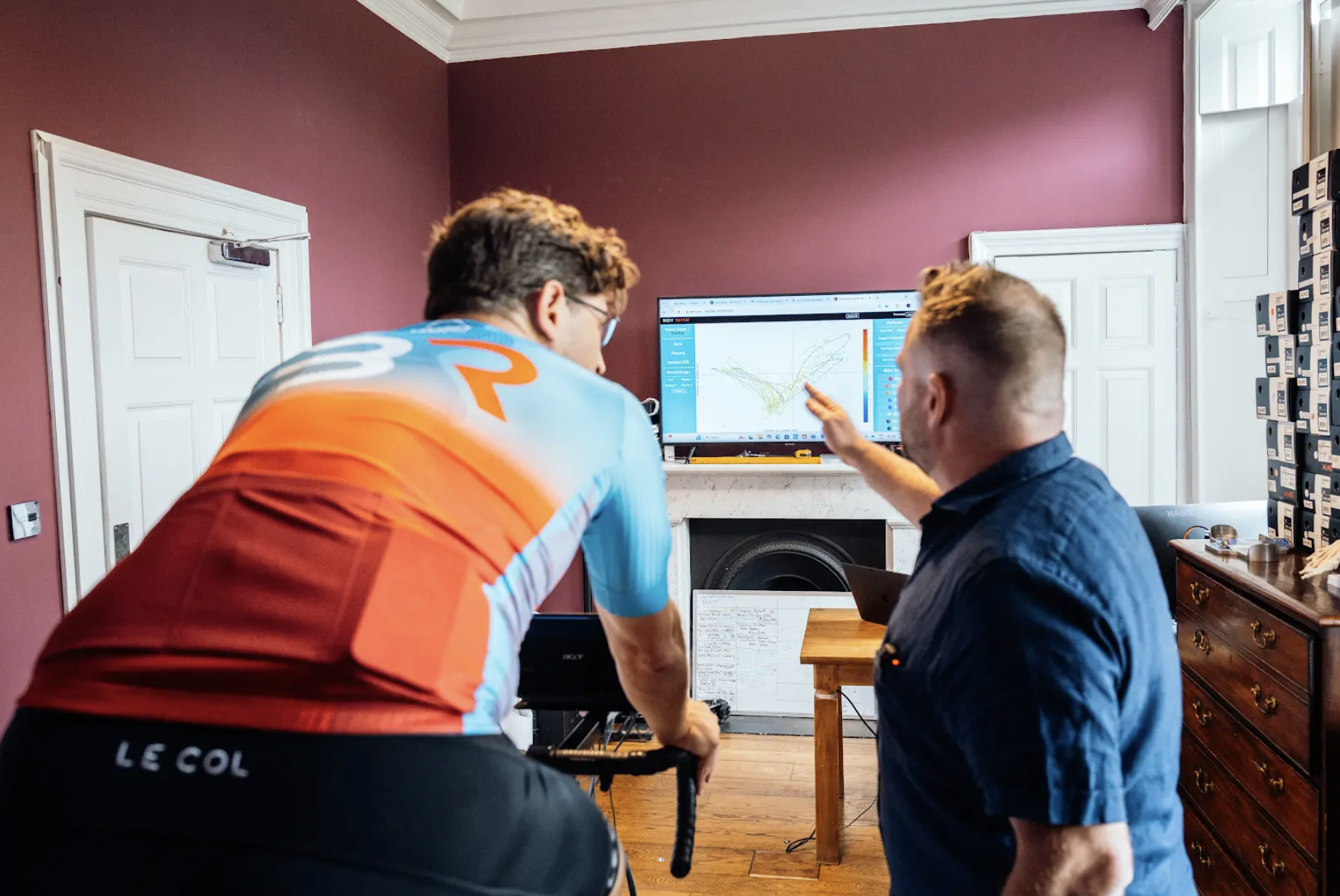
Body Rocket Fit is designed specifically for professional bike fitters working with performance-oriented riders. It is a sensor system that sits under the saddle and at the pedals, giving you objective insight into how a rider is interacting with the bike — stability, balance, movement, and load — as you make changes.
While Body Rocket as a platform extends into aerodynamics and broader performance optimisation, Fit focuses on the foundation: establishing a powerful, comfortable, and stable position. It gives fitters a way to see whether the system is settling or compensating, and to make confident decisions before layering on further performance gains.
Every experienced fitter knows that saddle height is not just a number. You already juggle knee angles, dynamic motion, rider feedback, and what your eye tells you under load. You’re thinking about how the pelvis behaves, how the rider settles in, and whether a position will hold up over time — not just whether it looks correct in a snapshot. In other words, you’re already working with the whole system.
What Body Rocket Fit is designed to do is simple: make that system visible, measurable, and easy to track while you work.
Not to replace your judgement — but to support it.
Traditional checks — knee angles, video, and dynamic observation — remain essential. They get you into a sensible range and give you confidence that a position is biomechanically reasonable.
Where things get harder is in the grey area you live in every day:
when two saddle heights both look acceptable, but only one truly works best for the rider.
That’s the moment where your experience takes over.
Body Rocket doesn’t try to replace that. It helps you put objective numbers behind what your eyes are already telling you, so you can move faster, be more precise, and — importantly — show your client exactly why a change matters.
As Body Rocket user Dougie Shaw puts it:
“It agrees with what I’m already seeing, but the absolute nature of the measurements really helps me dial in those last few percent in a fit.”
------------------------------------------------------------------------------------------------------------------------------------------------------------------
Saddle height ripples through the system
Every fitter understands that changing saddle height affects far more than leg extension.
You’re already thinking about:
Two riders can hit the same knee angle and still move very differently on the bike.
Body Rocket doesn’t change that reality — it gives you a clear window into it while you’re fitting.
------------------------------------------------------------------------------------------------------------------------------------------------------------------
What Body Rocket lets you track as you work
When you adjust saddle height with Body Rocket running, you can watch multiple aspects of the system settle — or unravel — in real time.
As you raise saddle height from “too low” toward the rider’s ideal range, you can see:
For a fitter, this is the kind of progress you’re already looking for — but now you can see it unfolding live and quantify it.
If the saddle becomes too high, the picture changes quickly: motion spikes, and the pelvis becomes busy again. That sharp change makes the tipping point obvious rather than something you have to infer.
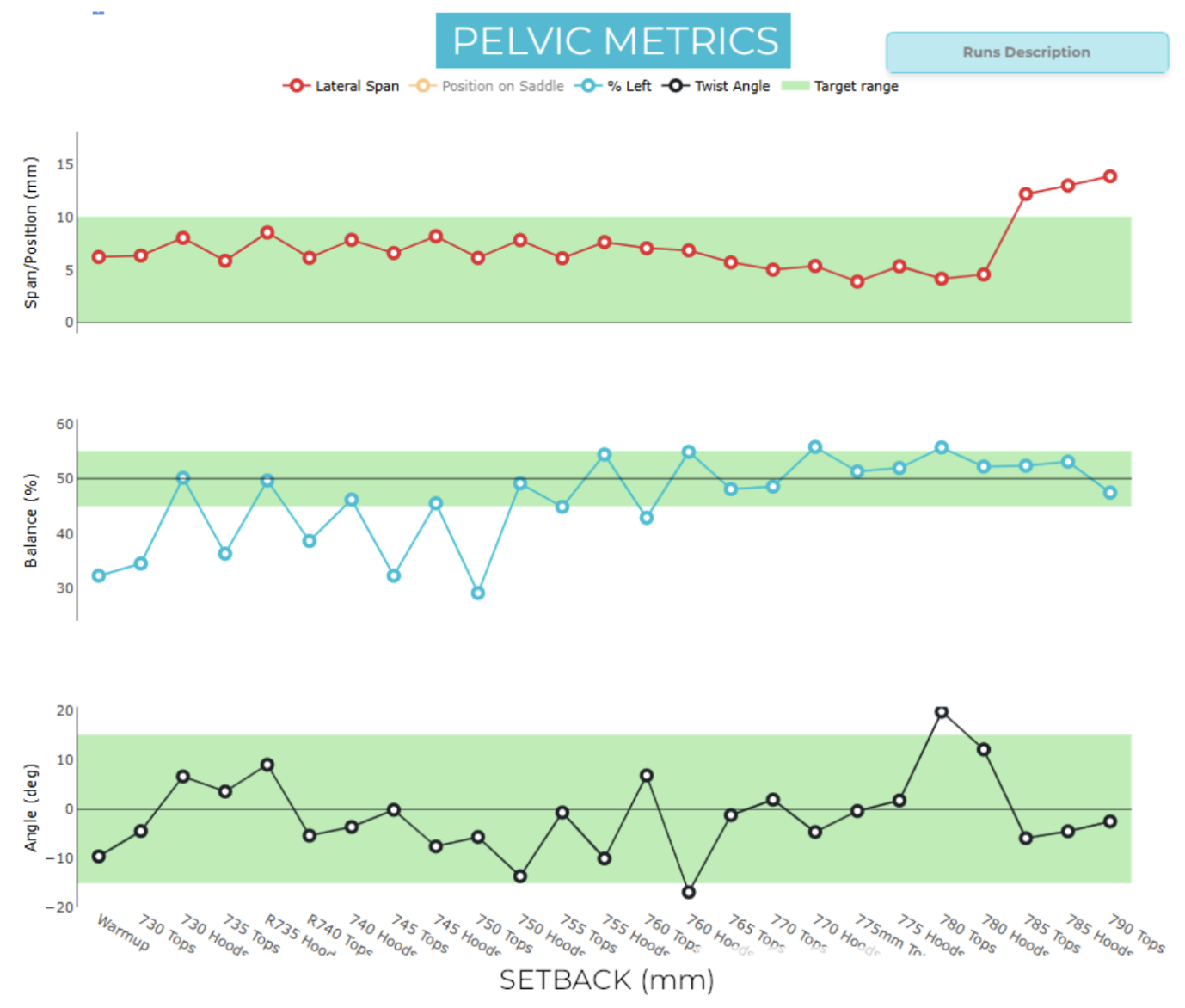
Importantly, the data also shows what you already know in practice: instability can appear at both extremes — too low or too high — just in different ways.
------------------------------------------------------------------------------------------------------------------------------------------------------------------
How the rider moves on the saddle
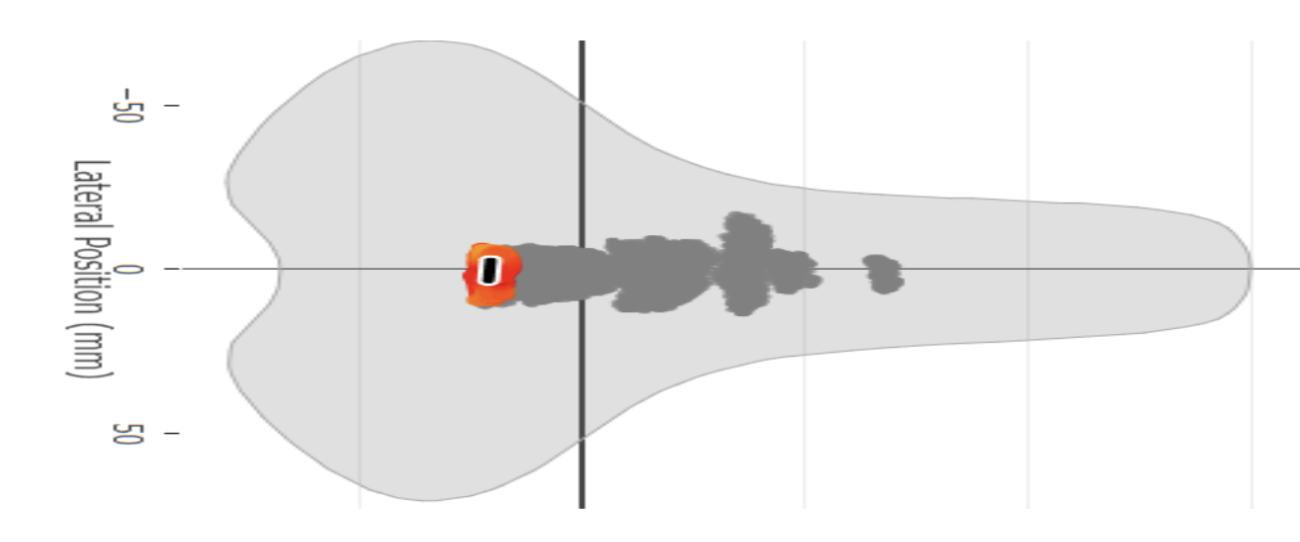
The top-down view of saddle forces adds another layer you can use with clients.
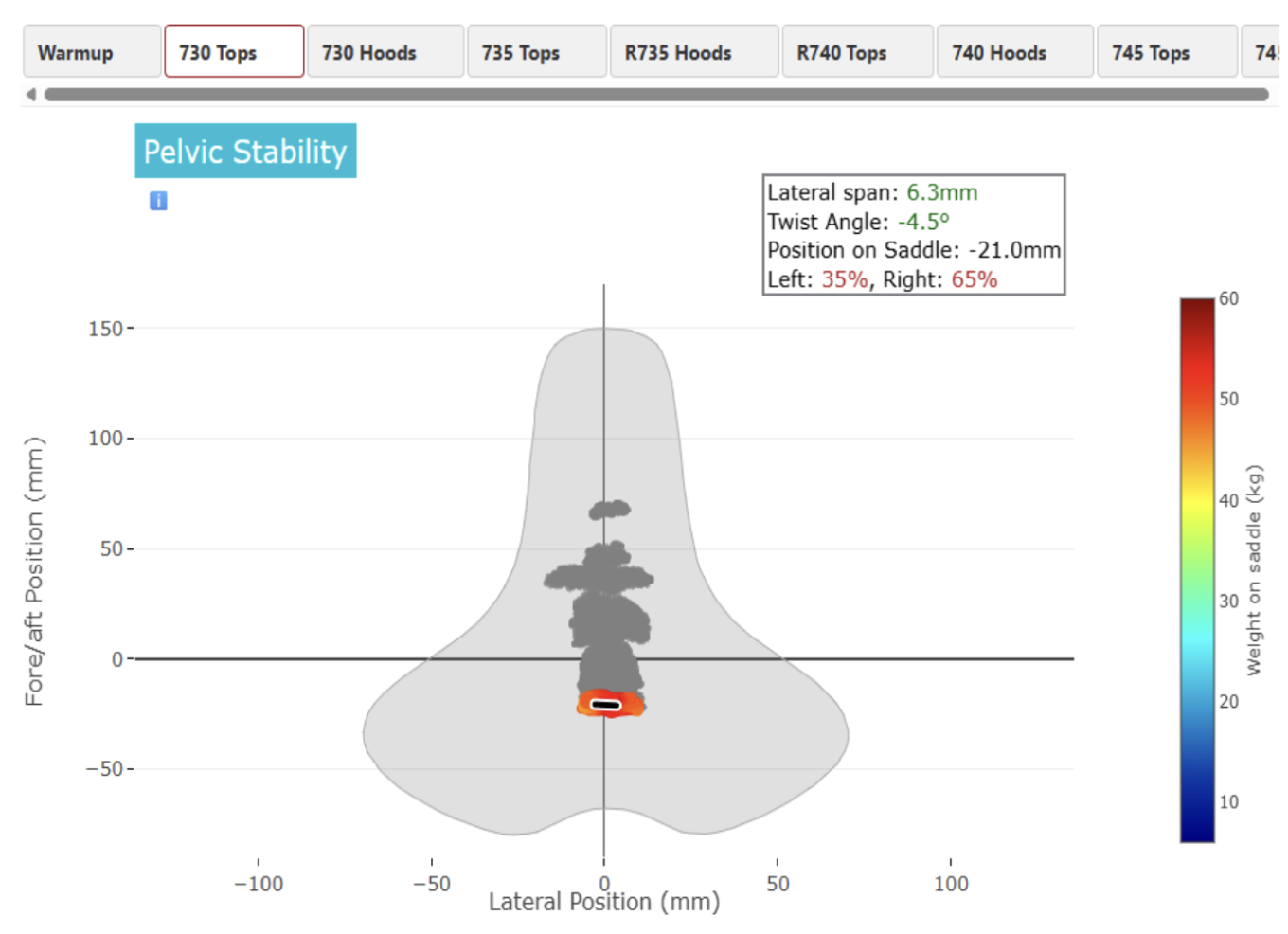
Across the test, the rider moves nearly 100 mm fore–aft on the saddle as height changes.
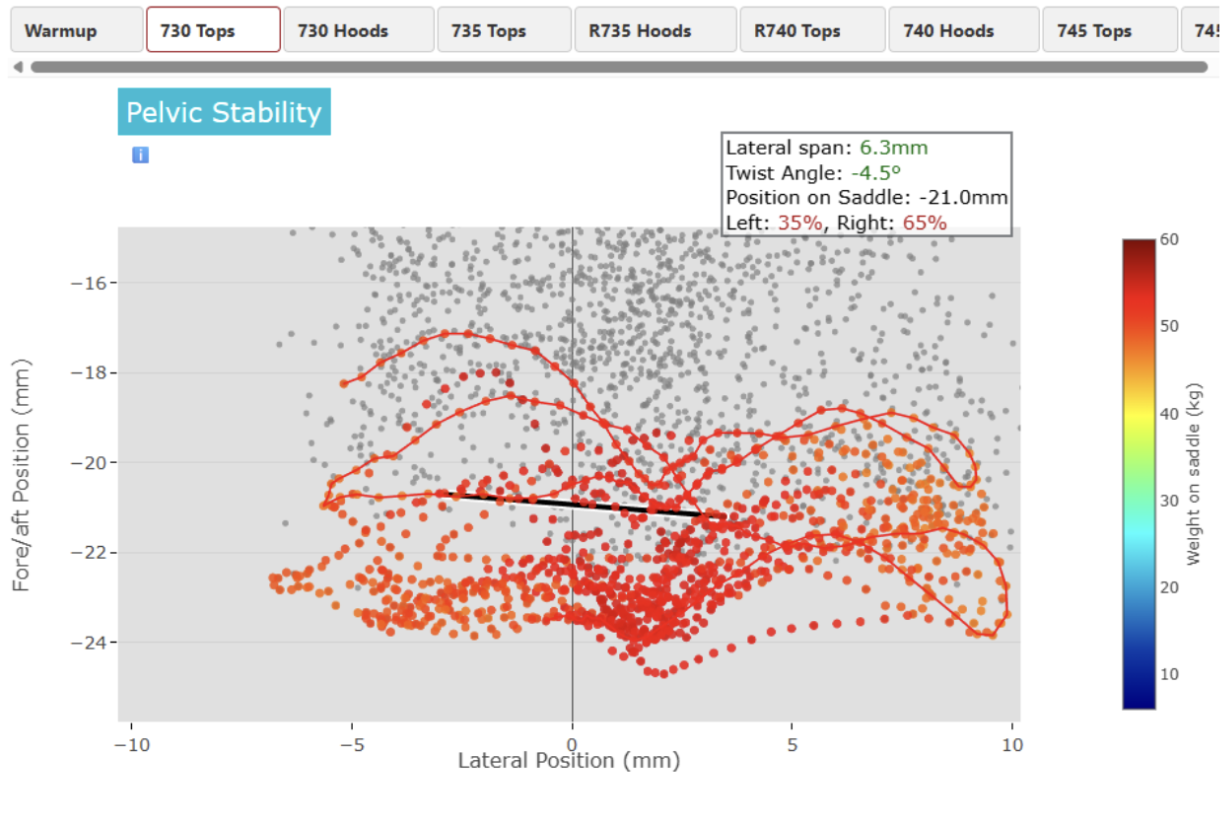
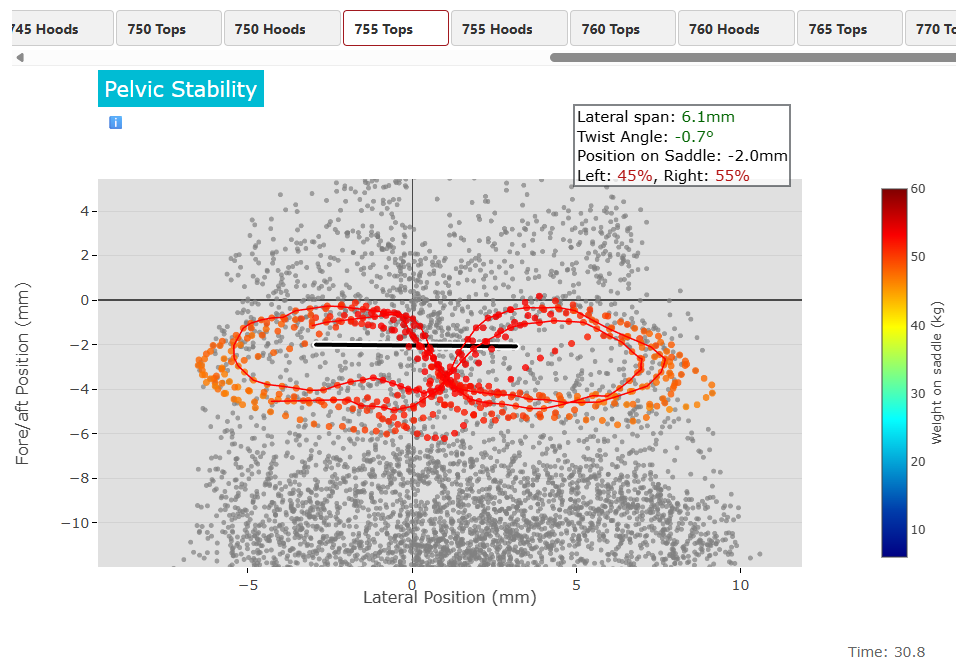
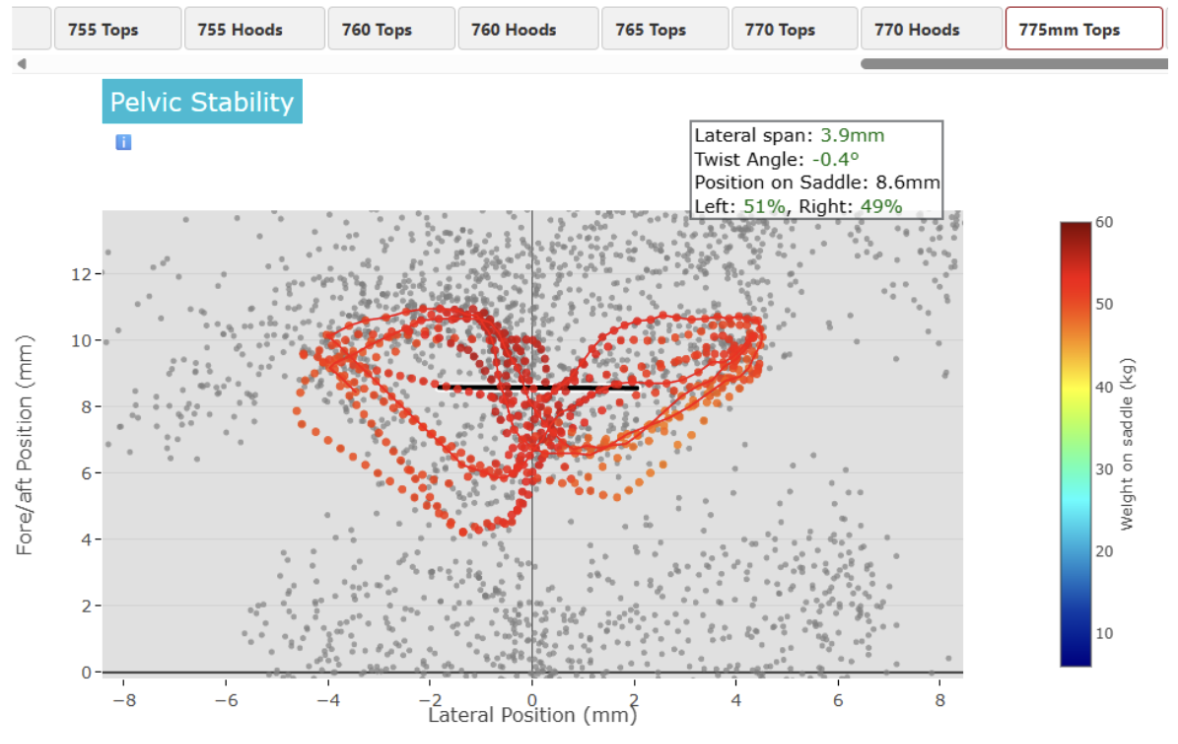
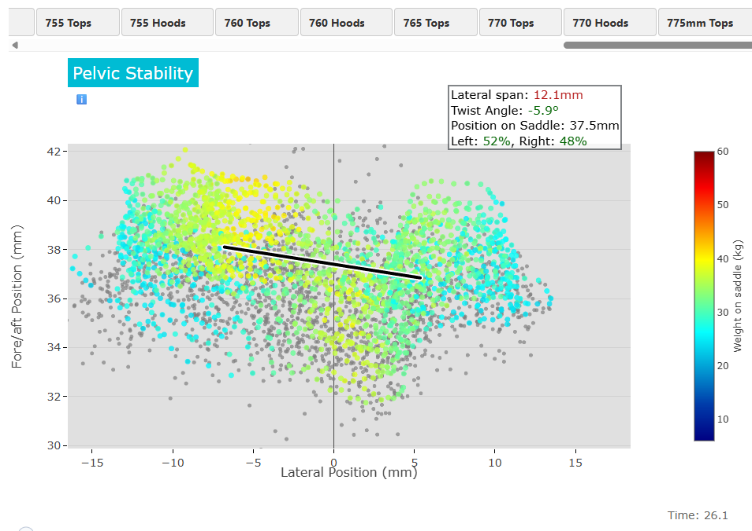
For a fitter, this is a powerful visual. Instead of describing compensation to a client, you can show it happening. These aren’t just pictures, this is happening live in front of you and your client. Not just when you’re recording, but all the time, letting you have an interactive conversation throughout the entire experience.
------------------------------------------------------------------------------------------------------------------------------------------------------------------
You already use traditional measures to set a sensible saddle-height range. Body Rocket helps you refine within that range by showing whether the system is actually settling — less roaming on the saddle, steadier pelvic motion, and more consistent balance across hand positions and over time. In practical terms, the best height is the one where the rider’s body stops compensating — and Body Rocket simply makes that moment visible. For you, and your customer.
Riders often shift their left/right bias with time, effort, and hand position, so a height that looks balanced in one moment or position can look different in another. Body Rocket lets you track that variability in real time, helping you base decisions on how the rider behaves across real riding conditions rather than a single snapshot.
More broadly, this is how Body Rocket fits into your workflow: you set saddle height your usual way, Body Rocket shows how the rider responds live, and you refine with immediate feedback — while visually demonstrating progress to your client as the system settles. Our aim is to make a rider’s interactions with the bike clearer so you can make better, more confident decisions for both performance and comfort.
Saddle height isn’t just about getting leg extension right — you already know that.
What Body Rocket gives you is a way to keep track of the whole picture, make progress visible in real time, and clearly show your clients why your adjustments matter.
Progress you can see.
Changes you can prove.
Decisions you can trust.
That’s Body Rocket.
But saddle height doesn’t exist in isolation. In part two, we’ll dive into how different hand positions interact with rider posture and why analysing them together is key to finding your true optimum saddle height.
.png)


.png)